Exciting news for the future of Type 2 Diabetes care!
- November 09, 2025
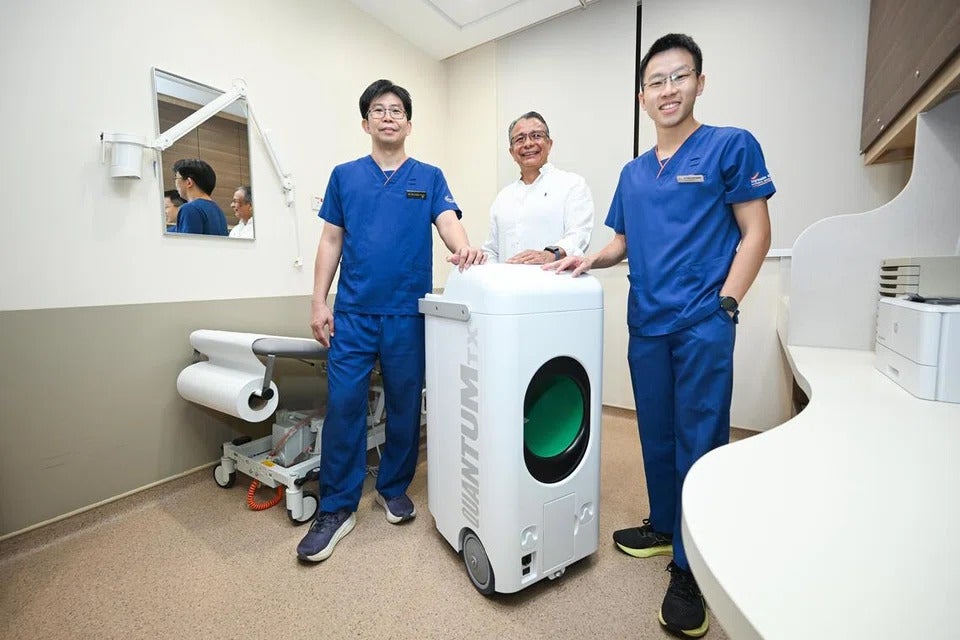 Photo credit: The Straits Times
An exploratory study from Singapore General Hospital (SGH) and iHealthtech, National University of Singapore reveals a promising, non-invasive treatment pathway.
The study utilised a novel magnetic pulse technology, developed by A/Prof Alfredo Franco-Obregón and the startup QuantumTX Pte Ltd, on 40 patients with poorly controlled Type 2 Diabetes.
The most compelling results were observed in patients with central obesity. After 12 weeks of treatment:
HbA1c levels dropped from 7.5% to 7.1%, moving them closer to the target range for well-controlled diabetes (6.5%-7.0%).
This is a significant finding for a patient group where traditional management through diet and exercise can be challenging. The technology works by stimulating the body’s mitochondria, effectively mimicking the metabolic benefits of exercise at a cellular level.
This preliminary success paves the way for the next phase: the team is now recruiting for larger, longer-term studies.
It’s a powerful example of how collaboration between clinicians, engineers and scientists is pushing the boundaries of what’s possible in medical treatments.
Read the full study in the Journal of Clinical Medicine.
A huge thank you to the dedicated clinicians and scientists from SGH and iHealthtech for their invaluable collaboration and hard work:
Fan Shuen Tseng | Gek Hsiang Lim | Yong Mong B. | Phong Ching Lee | Yee Kit Tai | Hong Chang Tan
Related News & Research Studies:
🌐 The Straits Times: Magnetic pulses lower blood sugar of diabetic patients with excess belly fat: Study
🌐 Journal of Clinical Medicine: Investigating the Metabolic Benefits of Magnetic Mitohormesis in Patients with Type 2 Diabetes Mellitus